


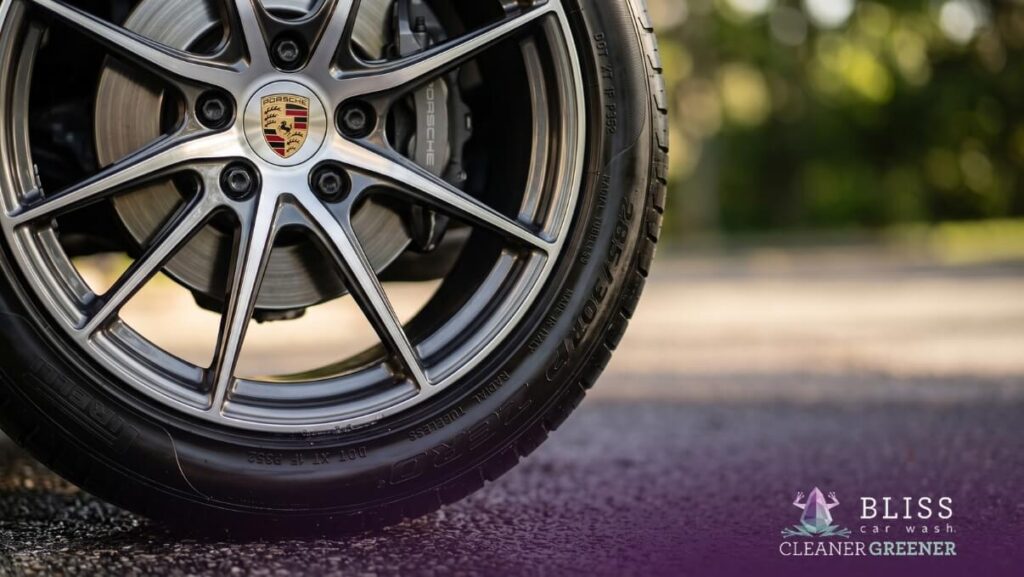
You can wash the paint until it gleams, polish the wheels until they sparkle, and still end up with a car that looks half finished. Look down, and the tires are dull, grayish, and flat looking, quietly undercutting everything else you just did. Tires are the one detail that either completes a clean car or gives it away.
At BLISS Car Wash, that finishing touch isn’t left to chance. Our packages include dedicated tire treatment built to deliver a deep, even gloss, not just a quick spray that fades by the time you get home.
What Actually Creates That Showroom Look
A true showroom tire finish comes from more than surface gloss. It’s the result of a product designed to sit evenly across the sidewall, resist water and grime, and hold its shine through actual driving rather than washing off in the first rain.
That distinction matters more than it seems. A tire that looks glossy for an hour after leaving the wash isn’t giving you the same result as one that still looks sharp a week later.
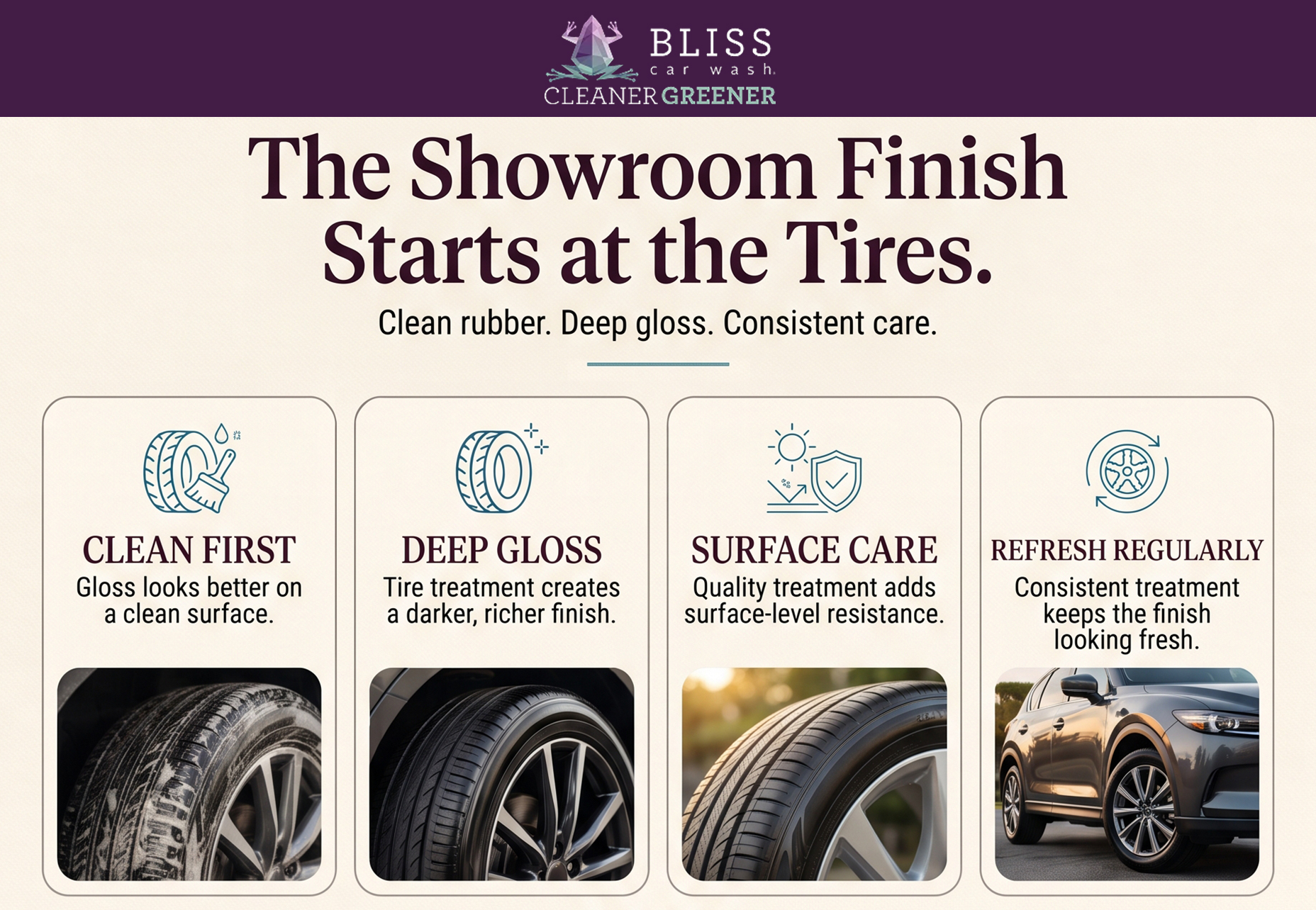
Why Tires Fade and Crack in the First Place
The Two Forces Working Against Your Tires
Tires face constant pressure from the environment, and two forces do most of the damage. According to Gold Eagle Co, ozone and ultraviolet light are the primary environmental causes of tire dry rot, and rubber left exposed to direct sunlight and open air is vulnerable to both over time.
How Tires Are Built to Fight Back, and Why That’s Not Enough
Tire manufacturers actually blend protection directly into the rubber during production. Carbon black is added to shield tires from UV light, while waxes are built in to protect against ozone damage, gradually working their way to the surface as the tire flexes during normal driving.
That built-in defense fades with age and inactivity, though, which is exactly why an additional layer of protection from a quality tire treatment makes a visible difference, both in appearance and in slowing the cracking and hardening that comes with prolonged exposure.
Does Tire Shine Actually Protect the Rubber?
A tire dressing can make a sidewall look darker, glossier, and more finished, but that isn’t quite the same thing as the protection engineered into the tire itself. Understanding the difference helps set realistic expectations for what a wash can and can’t do.
What’s Really Doing the Protecting
Modern tires already come with antioxidants, antiozonants, and protective waxes built into the rubber compound specifically to resist deterioration from oxygen, ozone, and heat. NHTSA has confirmed that tire manufacturers blend these antioxidants, antiozonants, waxes, and carbon black into their natural rubber compounds to resist degradation, while noting that storage and environmental conditions still play the biggest role in how fast that protection wears down.
A dressing applied afterward is primarily a surface treatment. It can leave a film that improves appearance and adds some surface level resistance, but it isn’t a replacement for the chemical protection already built into the tire.
Why Sunlight and Heat Still Matter Most
That distinction is especially important when it comes to dry rot and ozone cracking. NHTSA’s tire safety guidance notes that in addition to infrequent use, exposure to sunlight, warmer climates, and poor storage all contribute to tire aging, with the issue showing up more in southern, sun heavy states.
Product choice matters too, since harsh solvents and detergents can strip away the tire’s own anti-oxidation and anti-ozone layers, leaving it more exposed rather than less, according to Gold Eagle’s guidance on preventing tire cracking. The most useful way to think about tire shine is as finish maintenance, not tire repair or a substitute for regular tire inspection.
Silicone vs Water-Based Tire Shine
What Silicone Delivers
Silicone based tire dressings are prized for a reason. They create a deep, wet look gloss and tend to bond well to the rubber surface, which is part of why they remain the standard for that classic showroom finish drivers are looking for.
The Tradeoff Worth Knowing
Water based formulas are generally less greasy and slightly easier to keep off painted surfaces, but they typically don’t last as long between applications. Neither option is wrong, the choice mostly comes down to whether you’re prioritizing depth of shine or a lighter, more natural looking finish.
How BLISS Car Wash Delivers That Finish
Our process starts with Tire Scrubbers that aggressively clean asphalt oils, road film, brake dust, and grease from the tire surface, since no dressing looks good applied over grime. From there, our Tire Conditioner and Tire Shine formulas use the latest silicone technology to condition, shine, and protect, specifically guarding against the ozone, ultraviolet rays, and oxygen that cause tires to crack, dull, and harden over time.
Paired with our Wheel Brightener, which penetrates and loosens road soil and brake dust on all wheel and tire surfaces, the goal is a finished look where the tires match the effort that went into everything else. It’s not an upsell tacked onto the wash, it’s part of the process from Cleanse all the way through Transform+.
Getting (and Keeping) That Gloss Between Washes
A showroom finish fades faster than most drivers expect, especially with regular driving and sun exposure. Parking in shade when possible slows that fade, since UV exposure is one of the two primary forces working against the shine in the first place.
The bigger factor, though, is simply how often your tires get treated. A gloss that’s refreshed every visit never has the chance to fully fade the way a one time application does, which is part of why consistency matters more than any single premium treatment.
Choosing the Right Package for Your Tires
If you’re mostly focused on keeping grime and brake dust off your wheels and tires, our Cleanse package with Tire Scrubbers handles the basics every visit. If you want that deeper, wet look shine along with added protection, Sparkle and Transform+ step up to our full Tire Conditioner and Tire Shine treatment.
Either way, the products doing the work are the same silicone technology built to protect against environmental damage, not just add temporary gloss. The difference between packages is really about how much extra depth and durability you want layered on top of the basics.
Making That Showroom Finish Part of Your Routine
A BLISS Unlimited Membership keeps that tire treatment consistent instead of something you only think about before a special occasion. Since gloss fades with driving and sun exposure regardless of how good the original application was, regular visits do more for how your tires look day to day than an occasional deep clean.
That consistency is really the difference between a car that looks freshly detailed once a month and one that looks that way every time you park it.
Finishing the Job Right
A clean car with dull tires still looks unfinished, and a dirty car with glossy tires looks worse. Getting that true showroom look takes both halves working together, which is exactly what a proper wash routine is built to deliver.
If your tires have been looking flat or gray lately, it’s worth seeing what a dedicated tire treatment actually does. Find your nearest BLISS Car Wash location and see the difference a real showroom finish makes.
Frequently Asked Questions
What causes tires to look dull and gray over time?
Tires lose their deep black color and gloss as UV light and ozone exposure gradually break down the rubber’s surface, a process that speeds up with age and inactivity. Regular cleaning and a quality tire treatment help slow that fading and keep the surface looking fresh.
Is tire shine just cosmetic, or does it actually protect the tire?
It does a bit of both, though its role is narrower than many drivers assume. A quality tire treatment adds visible gloss and some surface level resistance to environmental exposure, but the real chemical protection against ozone and oxidation comes from the antioxidants and antiozonants already built into the tire during manufacturing.
How long does tire shine actually last?
That depends on the formula and how much driving and sun exposure the tires get. Silicone based products tend to hold their gloss longer than water based ones, though regular reapplication through routine washing keeps the finish consistently fresh either way.
What’s the difference between silicone and water-based tire shine?
Silicone based tire shine produces a deeper, longer lasting wet look gloss, while water based formulas tend to be lighter, less greasy, and easier to keep off nearby painted surfaces. Neither is objectively better, it comes down to the finish you prefer.
Does BLISS Car Wash include tire shine in every package?
Tire Scrubbers, which clean brake dust and road grime, are part of every wash. Our Tire Conditioner and Tire Shine treatment, which add that deeper gloss and UV protection, are included in our Sparkle and Transform+ packages.
Why do my tires crack even if I keep them clean?
Cracking, often called dry rot, is caused primarily by UV and ozone exposure breaking down the rubber over time, a process that’s influenced by storage, climate, and how often the tire is actually driven. Tires that sit unused for long periods are especially vulnerable, since the wax that naturally protects them needs flexing and movement to reach the surface.
Can tire dressing actually damage my tires?
Harsh, petroleum heavy solvents and cleaners can strip away the tire’s built-in oxidation and ozone protection, leaving the rubber more exposed rather than less. Choosing a quality treatment, rather than an aggressive cleaner, avoids that risk while still delivering the gloss you’re after.