


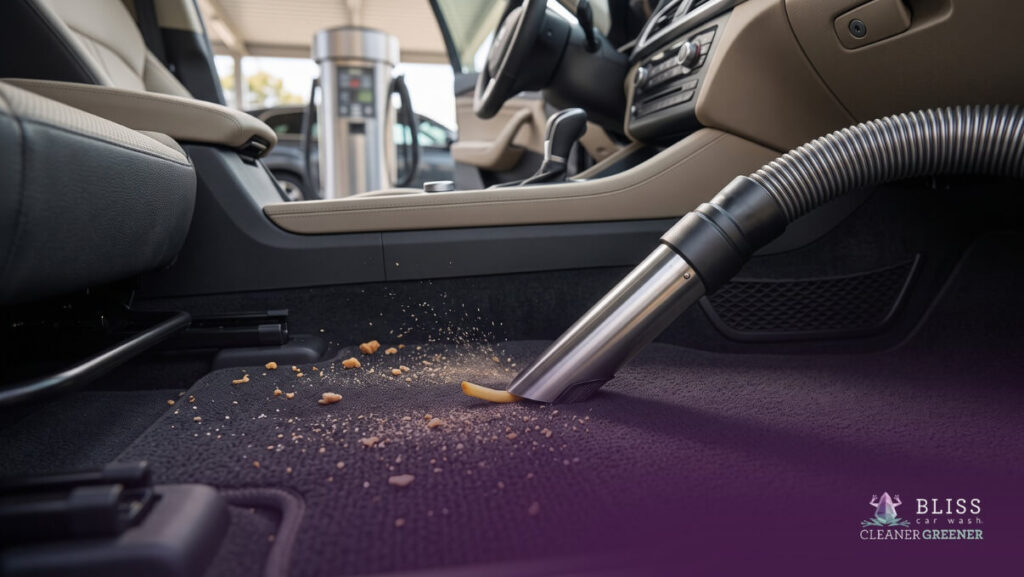
That french fry that slid under the seat three weeks ago is not going anywhere on its own. Neither is the fine layer of dust that settles into your dashboard vents, or the sand tracked in after a weekend outing. A clean exterior only tells half the story, and a proper vacuum is what handles the other half.
Most people think about car care in terms of the outside. Paint, shine, and a clean windshield are what catch the eye in a parking lot, so it is easy to treat the interior as an afterthought. But the inside of your car is where you actually spend your time, and it accumulates its own kind of wear that a wash alone will never touch.
At BLISS Car Wash, interior care is not treated as a separate errand. It is built into every visit, which makes it easier to actually keep up with. Understanding what a high suction vacuum does, and why suction alone does not tell the whole story, makes it clear why a few minutes at the vacuum station is worth the stop every time.
Why Vacuuming Matters More Than People Think
A car interior collects more than crumbs. Dust, pollen, pet hair, and fine grit work their way into carpet fibers and seat seams over time, and if they are not removed regularly, they grind into the material every time you sit down or brush against the fabric. That slow wear is part of why older, rarely vacuumed interiors start to look tired even when the exterior still shines.
Comfort and Air Quality
There is a comfort factor too. A car that smells musty or feels gritty underfoot is a less pleasant place to spend an hour commuting, and it is one of the first things a passenger or a potential buyer notices.
Cabin air quality is a genuine concern beyond just comfort. EPA-supported research on commuter exposure has examined how pollutants and particulates build up inside vehicle cabins during daily driving, which is part of why keeping dust and debris from settling into carpets and vents is worth taking seriously, not just for appearance.
The Cost of Skipping It
Beyond comfort, there is a straightforward cost argument. Replacing a stained carpet or worn seat fabric is a far bigger expense than a few minutes with a vacuum every week or two.
Treating interior cleaning as routine maintenance, rather than something you get to eventually, is what keeps that cost from becoming necessary in the first place.

What Suction Actually Does in a Car Vacuum
A “high suction” vacuum is not automatically better simply because it has a powerful motor. Vacuum performance depends on the relationship between airflow, suction pressure, and the nozzle, the parts that determine how effectively debris is actually lifted and carried through the machine, rather than just how strong the motor sounds on paper.
Pressure Versus Airflow
Suction pressure is the pulling force created when the vacuum lowers air pressure at the nozzle. Airflow is the volume of air actually moving through that opening. Independent vacuum testing, like the breakdowns published by VacuumWars, consistently shows that a vacuum needs both working together, since strong suction with weak airflow can fail to actually carry dislodged debris into the bin.
A machine that is strong in one of those areas but weak in the other will underperform no matter what the motor’s rated power looks like.
Why Nozzle Design Matters
Nozzle design plays a real role in how efficiently that process happens on different surfaces. A nozzle built for open, flat carpet behaves differently than one built for hard flooring or upholstery, since the way air moves across a surface changes depending on its texture and depth. That distinction matters inside a car more than almost anywhere else, since a single vehicle interior includes several very different surfaces within just a few feet of each other.
That is why attachments matter as much as raw power. A wide nozzle can efficiently cover floor mats and open carpet in a few passes, while a narrow crevice tool concentrates airflow into the tight spaces between seats, along seat rails, and around the center console where debris tends to collect and hide. Using the wrong attachment for the space, even with a genuinely powerful vacuum, often leaves debris behind simply because the airflow never reaches it.
Why Maintenance Matters Too
Airflow can also decline over time as filters or collection systems become obstructed with dust and debris. A vacuum that felt strong when new can lose a meaningful amount of pulling power as its air path gets restricted, which is part of why well maintained equipment matters just as much as the motor’s original rating.
So the useful question with any vacuum, including the ones at BLISS, is not simply how powerful it is. The better question is whether the system maintains effective airflow and suction through an attachment that actually reaches the debris you are trying to remove. That combination is what turns vacuuming from a quick surface pass into genuine interior cleaning.
Common Vacuuming Mistakes That Undo the Work
Even with a strong vacuum, a few habits can limit how much good a session actually does. Rushing through with only the main floor attachment is one of the most common mistakes, since it leaves crevices, seat seams, and the area around pedals untouched no matter how many times you run the nozzle over the open carpet.
The Trunk Gets Forgotten
Skipping the trunk is another easy oversight. Grocery bags, sports equipment, and general storage track in their own dust and debris, and a trunk that never gets vacuumed slowly becomes a source of odor and grit that can spread back into the cabin.
Treating the trunk as part of the same routine, rather than a separate task, keeps that from happening.
Waiting Too Long Between Sessions
Vacuuming only when the car looks visibly dirty is a third habit worth reconsidering. Fine dust and allergens build up long before they are visible to the eye, so waiting for an obvious mess means the interior has already been collecting debris for weeks or months.
A consistent schedule, paired with your regular wash visits, catches that buildup before it becomes noticeable.
Free Vacuum Access With Every BLISS Wash
Every BLISS wash package includes free access to vacuum stations, so vacuuming your interior does not require an extra purchase or a separate stop. Vacuum stations are available at BLISS locations, making it easy to pair an exterior wash with a few minutes cleaning out the inside of your car in the same visit.
That kind of built-in access matters because interior care is easy to skip when it feels like an extra step. When the vacuum is already part of the stop you are making anyway, it becomes a habit instead of a chore you keep putting off. For anyone with kids, pets, or a long commute, that convenience adds up quickly, since a car that collects debris on a near daily basis benefits far more from frequent, quick vacuum sessions than from one deep clean every few months.
Everyday Interior Care Between Visits
A high suction vacuum handles the bulk of the work, but a few habits help keep your interior fresher between BLISS visits. Wiping down hard surfaces like the dashboard and door panels on a regular basis prevents dust from building into a visible film, and a quick check under the seats catches stray items before they become a bigger cleanup later.
Interior Glass Needs Its Own Attention
Cleaning the interior glass separately from the exterior windows is another habit worth building in. Interior windshield haze often comes from off gassing plastics and fabric fibers rather than road grime, so a dedicated interior glass cleaner works better than whatever you use on the outside of the car.
Handling Odors Naturally
For lingering odors, simple non toxic solutions work well too. A small dish of baking soda left in the car overnight can help absorb odors naturally, and cracking the windows for a few minutes on a mild day helps clear out stale air.
These small habits complement a regular vacuum rather than replacing it, and together they keep the cabin feeling genuinely clean rather than just crumb free.
Why Interior Care Complements Exterior Protection
A car that looks great on the outside but feels neglected inside is only half taken care of. Pairing a high suction vacuum with the exterior protection from a BLISS wash, including BLISS Graphene protection on select packages, means your car gets a complete refresh rather than a partial one.
That combination matters beyond appearance. Kelley Blue Book’s own condition criteria explicitly list the body and interior being free of wear or visible defects as a requirement for its top valuation tiers, which means a well vacuumed interior is not just about comfort. It plays a real role in what your car is worth down the line.
Make the Vacuum Part of Your Routine
A high suction vacuum does the work that a wash alone cannot, clearing out the crumbs, dust, and debris that build up inside your car over time. With free vacuum access included in every BLISS package, there is no reason to let interior care fall behind your exterior routine.
Ready to give your car the full treatment? Visit BLISS Car Wash to find a location near you and make the most of your next wash.
Frequently Asked Questions
Does BLISS Car Wash include free vacuum access?
Yes. Every BLISS wash package includes free access to vacuum stations, so you can clean your interior in the same visit as your exterior wash at no extra cost.
What actually makes a vacuum “high suction”?
Real performance comes from the relationship between suction pressure, airflow, and nozzle design working together, not from motor power alone. A strong motor paired with a poor nozzle or a clogged filter will still underperform.
Why does nozzle choice matter for cleaning a car interior?
Different areas of a car need different tools. A wide nozzle handles open carpet and floor mats efficiently, while a narrow crevice tool concentrates airflow into tight spaces like seat seams and the center console.
What are the most common vacuuming mistakes people make?
Rushing through with only one attachment, skipping the trunk, and waiting until the car looks visibly dirty are the three most common habits that limit how effective a vacuum session actually is.
How often should I vacuum my car’s interior?
Vacuuming regularly, ideally every time you get an exterior wash, helps prevent dust, pollen, and debris from grinding into carpet fibers and seat seams before it becomes visible or hard to remove.
Can vacuuming really affect my car’s resale value?
Yes. Kelley Blue Book’s own condition standards specifically call out interior wear and visible defects as a factor in vehicle valuation, so a well maintained interior can genuinely affect what your car is worth at trade-in.
Does interior care matter as much as exterior protection?
Yes. A car with a protected, polished exterior but a neglected interior is only half cared for. Pairing regular vacuuming with exterior protection, including BLISS Graphene on select packages, gives your car complete care.